Planning To Build Your Dream Luxury Home?
Contact UsPlanning To Build Your Dream Luxury Home?
Contact Us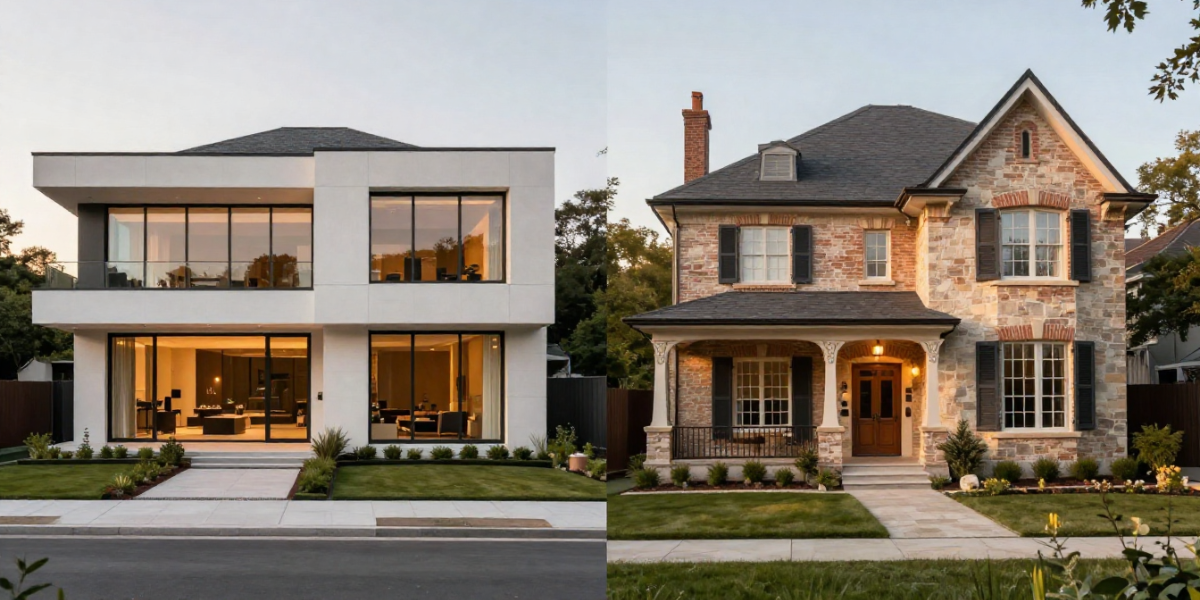
Choosing a custom home is about more than picking a floor plan. Every design decision influences how daily life feels for years to come. From the layout and materials to energy performance and long-term maintenance, each detail shapes comfort, convenience, and value. The discussion around modern vs traditional homes often comes down to personal priorities instead of one style being better than the other.
Modern homes appeal to homeowners who enjoy clean lines, open interiors, and smart technology. Traditional homes continue to attract families who appreciate timeless architecture, classic details, and familiar layouts. Understanding the strengths of each style makes it easier to choose a home that matches daily routines, future plans, and personal preferences.
This guide compares both approaches, beginning with modern custom homes before moving into traditional designs. It also highlights the key factors that influence the decision so homeowners can move forward with confidence.
Modern custom homes focus on simplicity, functionality, and efficient living. Instead of decorative features taking center stage, the design emphasizes usable space, natural light, and seamless movement between rooms. Large windows, open floor plans, and clean architectural lines create homes that feel bright, spacious, and connected.
Today’s modern homes also incorporate advanced building materials, energy-efficient systems, and smart technology, making them practical choices for homeowners who value convenience and long-term performance.
One of the defining characteristics of modern homes is the open layout. Kitchens, dining rooms, and living spaces flow together without unnecessary walls separating them. This arrangement creates better visibility throughout the home while encouraging family interaction and easier entertaining. Open layouts also allow natural light to travel farther, making interiors appear larger and more inviting.
Modern homes are recognized by simple shapes, minimal ornamentation, and balanced proportions. Flat or low-pitched roofs, large glass panels, geometric forms, and uncluttered exteriors create a sleek appearance that feels current without relying on excessive decoration. Inside, the same design philosophy continues through streamlined cabinetry, simple finishes, and organized spaces.
Modern architecture places significant attention on connecting interior spaces with the outdoors. Oversized windows, sliding glass doors, and covered patios allow sunlight to fill the home while creating smooth transitions between indoor and outdoor areas. This design approach can improve comfort while making outdoor entertaining more enjoyable throughout the year.
Modern homes frequently include high-performance insulation, energy-efficient windows, LED lighting, advanced HVAC systems, and smart home automation. Features such as programmable thermostats, automated lighting, security systems, and remote-controlled appliances improve convenience while helping reduce energy consumption.
Modern lifestyles continue to change as remote work, home fitness, and multi-purpose rooms become increasingly common. Modern custom homes often include adaptable spaces that can serve as offices, guest rooms, study areas, or hobby rooms without requiring major renovations later. This flexibility allows homeowners to adjust their living environment as family needs change.
Many modern homes use durable materials such as steel, concrete, engineered wood, fiber cement siding, and composite products. These materials often require less maintenance while offering excellent durability and weather resistance. For homeowners seeking long-term convenience, reduced maintenance can become a valuable advantage.
Homeowners planning new construction often consult us, trusted custom home builders in Austin, TX, to understand how these modern design principles can be incorporated into homes that suit local architecture, climate, and personal preferences.
Modern custom homes offer several practical benefits that appeal to today’s homeowners.
Traditional custom homes remain one of the most popular residential styles across the United States. Their timeless appearance, familiar layouts, and architectural character continue to attract homeowners looking for warmth, elegance, and lasting appeal.
Unlike minimalist modern architecture, traditional homes celebrate craftsmanship through decorative trim, detailed woodwork, pitched roofs, and welcoming front porches.
Traditional homes draw inspiration from historic American architectural styles, including Colonial, Craftsman, Georgian, and farmhouse designs. Decorative moldings, symmetrical facades, shutters, brick or stone exteriors, and detailed rooflines create a timeless appearance that remains attractive for decades. Many homeowners appreciate the familiar charm these design elements provide.
Instead of one large open area, traditional homes typically separate kitchens, dining rooms, family rooms, and formal living areas. These individual rooms create privacy while allowing different activities to take place simultaneously without distractions. Families who value quieter environments often appreciate this arrangement.
Traditional interiors focus on comfort through rich materials, detailed trim work, hardwood flooring, decorative fireplaces, and classic cabinetry. The overall atmosphere feels inviting, balanced, and comfortable rather than minimalist. These homes often accommodate heirloom furniture and traditional decorating styles with ease.
Traditional homes tend to maintain their visual appeal across changing design trends. Their architectural details have remained popular for generations, making them attractive choices for homeowners planning long-term ownership. Because of their enduring style, traditional homes often retain broad market appeal during resale.
Many traditional homes include larger dining rooms, welcoming entryways, dedicated family rooms, and multiple gathering spaces. These layouts support holidays, celebrations, and everyday family routines while providing comfortable areas for entertaining guests.
Traditional homes provide many opportunities for customized craftsmanship. Crown molding, custom staircases, built-in shelving, decorative ceilings, and handcrafted cabinetry allow homeowners to create unique interiors filled with character.
Many homeowners also invest in kitchen remodeling to preserve traditional charm while incorporating updated appliances, improved storage, and modern functionality.
Traditional custom homes continue to appeal because they offer several lasting benefits.
The following table provides a simple comparison of custom home design styles across several important factors.
| Feature | Modern Custom Homes | Traditional Custom Homes |
| Layout | Open and flexible | Defined individual rooms |
| Appearance | Clean, minimal design | Decorative, classic architecture |
| Natural Light | Large windows throughout | Balanced window placement |
| Technology | Smart home integration | Often added during construction |
| Maintenance | Often lower maintenance | Varies depending on the materials used |
| Interior Style | Simple and uncluttered | Warm and detailed |
| Outdoor Connection | Strong indoor outdoor flow | Separate outdoor gathering spaces |
| Long-Term Appeal | Contemporary appearance | Timeless architectural style |
A family that enjoys entertaining may appreciate open modern layouts. Families seeking quieter individual spaces may feel more comfortable in traditional floor plans.
Growing families should consider how the home will function years from now. Flexible spaces, additional bedrooms, aging-in-place features, and future accessibility all deserve careful planning before construction begins.
Construction budgets vary depending on materials, finishes, labor, and design complexity. Long-term operating costs should also include maintenance, energy consumption, and future upgrades.
While custom homes reflect personal preferences, they should also complement the surrounding community. Choosing a design that fits nearby homes often contributes to stronger long-term property value.
Some homeowners naturally appreciate clean simplicity, while others enjoy architectural details and decorative craftsmanship. The right choice is the one that continues to feel comfortable long after construction is complete.
The conversation around modern vs traditional house styles does not produce one universal answer. Instead, the best choice depends on how a family lives every day.
Modern homes suit homeowners looking for open spaces, advanced technology, energy efficiency, and contemporary design. Traditional homes remain excellent choices for people who value timeless architecture, defined rooms, and lasting character.
Many custom homes today successfully combine elements from both styles. A home may feature an open modern kitchen while incorporating traditional exterior architecture, creating a balanced design that meets both practical and aesthetic goals.
Building a custom home represents one of the most important investments a family can make. Taking time to compare layouts, architectural features, maintenance requirements, energy performance, and long-term lifestyle needs creates greater confidence throughout the building process.
Modern homes provide flexibility, efficiency, and contemporary comfort. Traditional homes continue to offer warmth, timeless beauty, and enduring appeal. The right decision comes from understanding how each style supports everyday living while reflecting personal preferences for years to come.
Transform outdated spaces into functional, stylish kitchens with professional kitchen remodeling services in Austin, TX, tailored to comfort, flow, and long-term value. Contact us today to start planning a kitchen that better fits the way you live and cook.
Construction costs depend more on materials, finishes, labor, and complexity than on the architectural style itself. Both styles can be designed within various budgets.
Both styles perform well when built with quality craftsmanship and located in desirable neighborhoods. Market demand often depends on local buyer preferences.
Yes. Many custom homes blend traditional exterior architecture with modern interiors, creating functional spaces while maintaining timeless curb appeal.